5 Pieces of Advice I Give to Every Solo Jazz Student
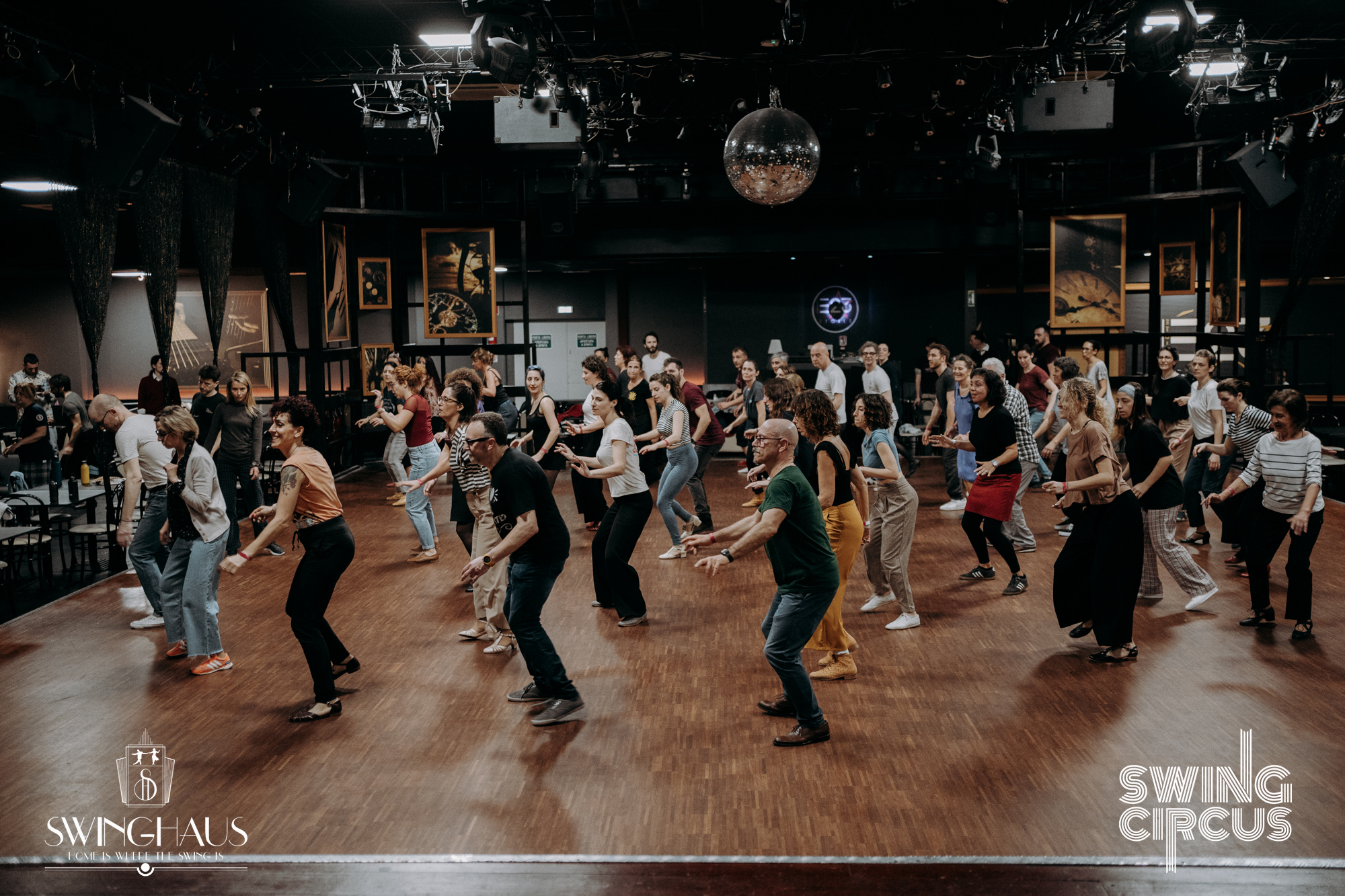
Over the years of teaching solo jazz, I’ve noticed something… The same patterns, the same little habits, keep appearing across students. Whether they’re total beginners or experienced dancers, there are 5 core pieces of feedback I give again and again.
If you’ve ever wondered “Why doesn’t my dancing feel alive yet?” or “What am I missing besides the steps?” this is for you.
Solo jazz tip #1: Start with the Groove — Bounce is the Heartbeat of the Dance
That juicy groove within you that goes through the floor to the beat of the song you’re listening to – that is bounce.
Often we think the dance is the steps we do.
Until you’ve started doing some footwork that has a name, you think you’re not dancing.
Release yourself from that spell. Dance starts way before the steps.
It starts inside your pulsating heart, manifests through your body, and becomes a pulse that unites you with the music. Bounce can be big or small, full-body or just in the shoulder.
In jazz dances, the bounce is all about going through the Earth, sending vibration down into it. In some African traditions, Mother Earth was praised as sacred: the source of food, the resting bed of ancestors.
By dancing on the Earth, we awaken the spirits of those who came before.
“If the foot is lifted, it’s only to be brought back to earth.”
Tip: Connect with the floor. Drop the weight off your shoulders, down through your hips, into the ground. Let your upper body float and breathe. Before you step, invite the music in — then give the floor your weight.
Take this class from Solo Jazz 101 course on Bounce:
Solo jazz tip #2: Be more grounded
One of the most common feedbacks I give my students is: be more grounded.
“Dance with bended knees, lest you be taken for a corpse.” — Kongo proverb
Go through the floor. Connect to gravity.
Often, I see movements driven upward — as if the energy wants to float away — even in steps like bounce, kick ball change, or Charleston that seem jumpy on the surface.
But in solo jazz, movements are weighted, with a dynamic spine and grounded rhythms.
Although by the amount of questions my students ask “Ksenia, what do you mean by “be more grounded” in solo jazz?” I knew I had to come up with some creative idea.
The idea is an elevator with 3 floors: “-1 / 0 / +1”
- 0 = your default jazz stance: slightly bent limbs, ready to move.
- -1 = any stomping, accent, or downbeat moment, deeper bend, more weight into the floor.
- +1 = the rare jump or lift that leaves the ground, but even then, the intention is to return to earth.
“Many African dances are directed towards earth, acknowledging its function as a food source, but also as a resting site for their ancestors… Feet are used to shuffle, stomp, brush, graze, to embrace the ground with the entire foot. When the foot is lifted, the emphasis is to return it to the ground as quickly as possible.” — Hot Feet and Social Change: African Dance and Diaspora Communities
If the foot is lifted, it’s only to come back with purpose.
Dance directed towards earth. Nourishing earth as food source and as resting place for ancestors.
Solo jazz tip #2: Not Only Feet!
“Move the body first!” and “Not only feet!” have been my jazz-class battle cries for years.
Jazz dance is footwork-heavy, yes! But rooted in African dance, it’s just as rich in upper body movement: isolations, asymmetry, angularity, and contractions in the chest and hips.
We often focus on placing the feet “on time” and forget the essential body movement that makes those steps flow. In life, when we walk, the body moves first, the feet follow. Watch a baby learning to walk — their feet are just catching up with their body.
If you struggle with rhythm or transitions, the issue is often not timing, it’s not knowing how to use your body weight.
Think holistically: your arms, chest, neck, and hips should all be alive.
When I say “Not only feet!” I simultaneously ask “What are your arms doing? Your chest, your neck, your hips? Are they alive? Are they part of this dance?
In order to awaken your body, have the body available for the expressive movement, I recommend to do a powerful all around warm up. My warm ups are not just physical training. It’s a ritual to step in to your body, jazz movement and here and now.
In Secrets of Solo I have a whole library dedicated to Warm Ups, so my students always start their dancing journey with a powerful awakening.
Another class I recommend to take on this topic is this one, about posture:
Solo Jazz Tip #3. The Look!
Where you look changes everything.
Your look isn’t just about your eyes – it’s your whole body position.
Look down, and your spine curves into that direction. Look up, and your chest opens. Look sideways, and a spiral appears through your spine.
Too many dancers stare at the floor or into nothingness which not only locks the body but disconnects you from your surroundings.
“There are no answers on the floor. Look around. Include the space and the people into your dance.” — David Zambrano, Flying Low technique teacher
“Look around. Include all the space and all the people around you in your dance.”
Looking around frees your neck, spine, and upper body. It’s brighter, more engaging. And it keeps you present — unlike the “look into nothingness” that happens when you disappear into your head trying to solve a step.
Solo jazz tip #4. What About Your Arms and Fingers?
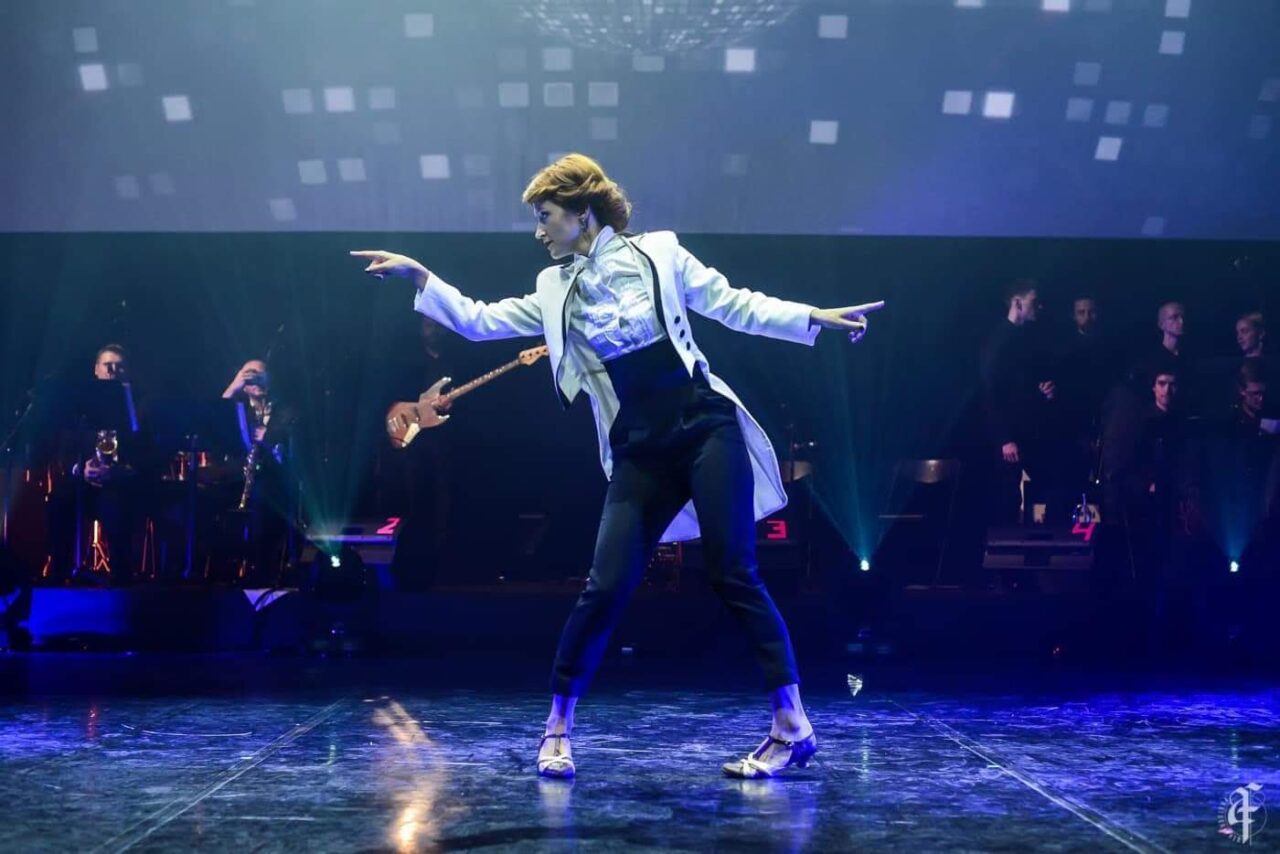
These deliciously beautiful body parts are your secret weapon.
Arms and fingers are often forgotten in solo jazz, but they are storytelling tools. They can direct, accentuate, or even speak in “archetypical” gestures.
Paying attention to your wrists, fingers, and arms can transform your dance. You can accentuate rhythm, underline a phrase, or express an emotion just through the shape of your hands.
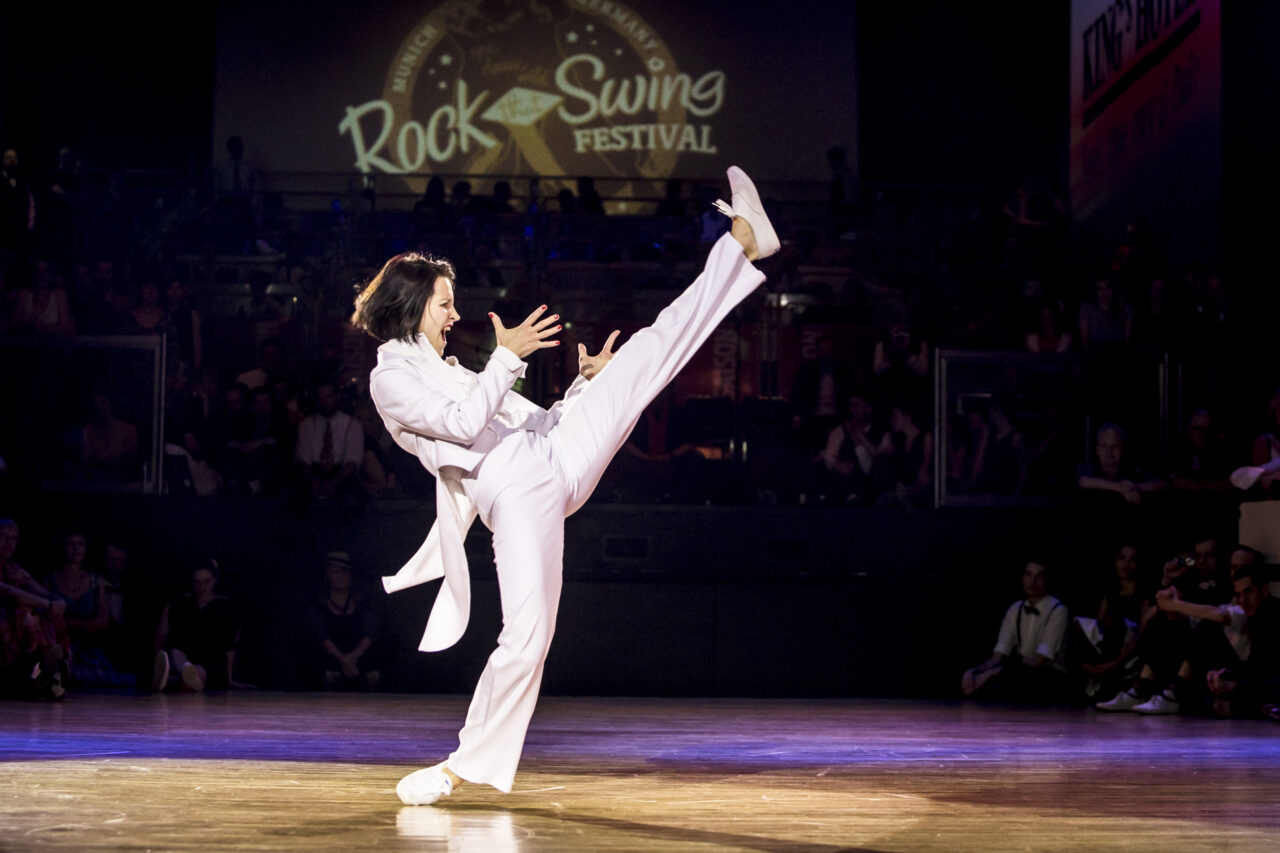
In jazz, originality is admired and expected even when there are historical references for how to use arms in a Shorty George, a Mambo, or a Tacky Annie.
The challenge? Finding what works in your body today. That’s the work.
And I have a perfect blog and video for this tips.
Solo jazz tip #5. Don’t Just Execute the Step — Live It
This is where investment comes in. Cherish each moment. Let every step mean something.
Dance isn’t just a set of moves. It’s a language. It’s culture. And at its heart, it’s the expression of an individual human.
The jazz basics we know today: Shorty George, Tacky Annie, Suzy Q, were once new. They were born in moments of play, improvisation, and expression. They survived because they meant something to someone.
So don’t mummify them. Rediscover them. Ask yourself:
- Do I know the why and how of this step?
- Do I know its history and origin?
- Am I bringing my own vitality and personality to it?
Because in jazz, “It ain’t what you do, it’s the way that you do it.”
Key takeaway:
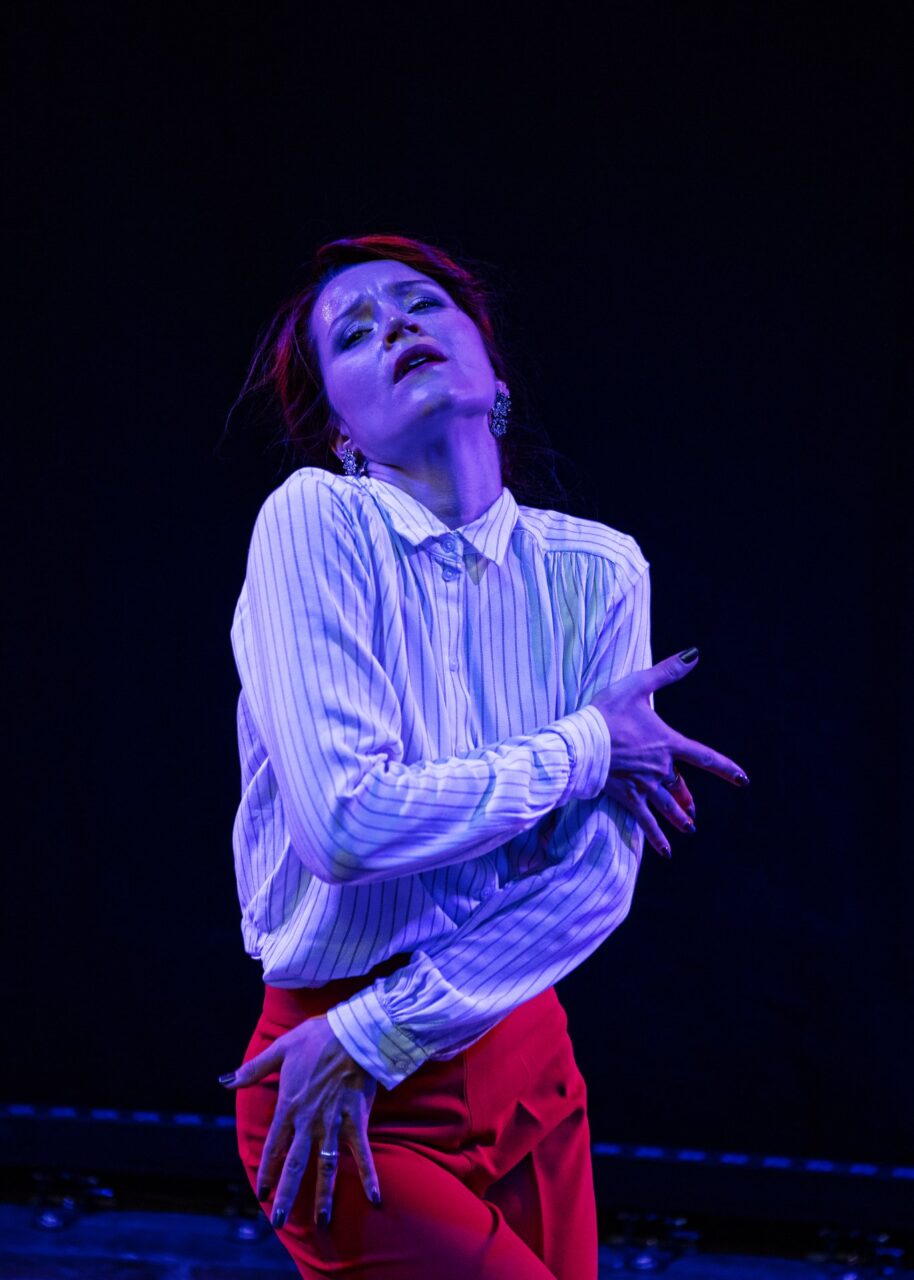
The most important things in solo jazz aren’t just the steps. It’s style, musicality, personality, and connection to the earth, the music, and your own body.
Your Guide in Solo Jazz
I’m Ksenia Parkhatskaya—a dancer, choreographer, singer, and actress whose work spans jazz, swing, and 1920s Charleston. Since 2010, I’ve performed and taught across 35 countries with ensembles like the Christian McBride Trio, Paris Opera Orchestra, Postmodern Jukebox, and Barcelona Jazz Orchestra. My online videos have been viewed over 200 million times.
“Taking the world of solo jazz by storm… a contemporary jazz sensation.” — Hong Kong Dance Magazine
How I Help You Grow — Secrets of Solo & Spotlight
At Secrets of Solo, my online school, I built a living, breathing space where solo jazz dancers can explore, connect, and evolve no matter where they live. Since starting in 2015, more than 5,200 dancers have taken courses in solo jazz, 20s Charleston, and improvisation.
The Spotlight program is designed to keep you engaged weekly with a super-focused practice task and my personal feedback, motivation and progress, right from your inbox.
What Students Say
“After years of feeling stiff and awkward, I’m finally dancing with flow and joy, and I can see the difference in myself.” — Annie
“I used to dance locked in my head, now I move with flow and trust what I feel.” — Giorgia
“Before this, I was practicing without structure, now I’ve made real progress, with clear steps and weekly focus through Spotlight.” — Noemie
💡 You can become a member today and start transforming your dancing — gaining fluidity, confidence, and your own unique style. It’s risk free, we have 30 – day – money- back – guarantee policy. Check the membership plans here.
Curious to discover more tips to improve your solo jazz dancing and teaching?
Check out my blogs: