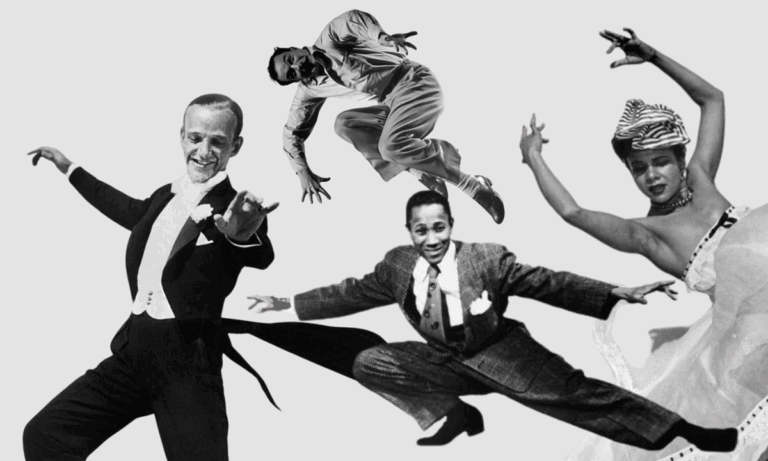
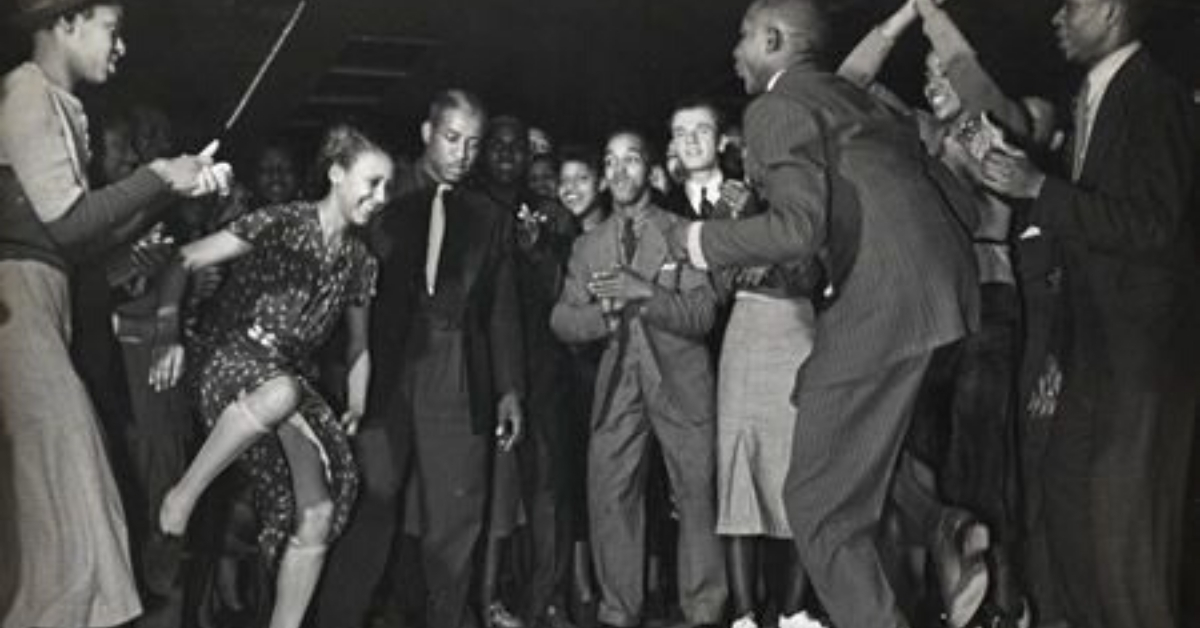
Jazz dance is one of the most vibrant, rhythm-rich, and expressive dance forms in the world — but the history of jazz dance goes far beyond flashy steps. Its roots lie deep in African and African American cultural traditions, born from the meeting of African rhythms and movement with European music and social structures.
In this article, you’ll discover 10 powerful insights into the African roots and Black cultural legacy of jazz dance, including:
- Why understanding the history of jazz dance can transform the way you move today
- Where jazz dance comes from and how vernacular jazz dance developed
- The key characteristics that make jazz dance unique and timeless
Birth of Jazz Dance: African Roots and the Birth of a Cultural Legacy
What Is Jazz Dance?
Jazz dance is a dynamic African American dance form rooted in West African movement traditions, characterized by rhythm, improvisation, and syncopation
When you say the word “jazz” today, it almost needs a qualifier — jazz dance, jazz music, Broadway jazz — because the term carries many meanings and a complex history.
But the roots of jazz, especially jazz dance, run deep into the soil of West Africa.
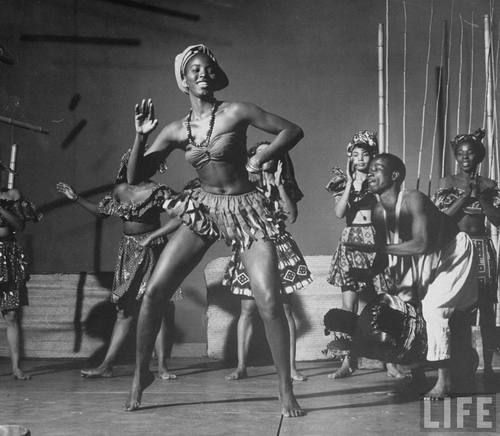
Where Did Jazz Dance Come From?
The African roots of jazz dance run deep, stretching back centuries before the term “jazz” was ever coined. In the early 17th century, millions of African people were forcibly taken to North America and other parts of the world through the transatlantic slave trade.
During slavery in the United States, African dance traditions evolved in new and complex ways, giving rise to African American vernacular jazz dance.
The African roots of jazz dance are visible in its rhythms, grounded posture, improvisation, and expressive movement. These qualities survived despite oppressive conditions, merging over time with European social dances to create something entirely new.
The rhythms, grounded posture, improvisation, and expressive movement of West African dance became the foundation of what we now call jazz dance.
How Jazz Dance Evolved: From African Roots to the Social Dance Floor?
Many early forms of vernacular jazz dance including the Buzzard Lope and the Turkey Trot — had direct animalistic references.
These dances were developed and performed in enslaved communities, often as a form of both expression and survival.
White audiences found these dances intriguing because of their vitality, dynamism, freedom of improvisation, and emotional expression.
At the same time, Black dancers observed white social dances, adopting elements such as:
- Close embrace in couple dancing
- Vertical posture
- Formal composition of movement
These influences came together in dances like the Cakewalk, the Charleston, and later, the Lindy Hop — all of which blended African rhythm and improvisation with European structure.
How African and European Traditions Shaped Jazz Dance
Jazz dance developed in the unique cultural melting pot of America the result of African traditions meeting European influences under the brutal conditions of slavery and segregation.
Its evolution was shaped by:
- The mixing of African people from different tribes and cultural backgrounds
- Interaction with European dance and music traditions
- Harsh restrictions on Black music and dance imposed by slaveholders, which often forced innovation
These restrictions didn’t suppress the dance, they reshaped it.
Jazz dance became a cultural dialogue between African and European aesthetics, creating something entirely new.
Why Understanding the African Influence Matters
To truly grasp the nature of jazz dance, you must understand the Africanist aesthetic that defines its movement:
- Grounded posture rather than upright verticality
- Polycentric movement — multiple body parts moving independently
- Call-and-response interaction between dancers and musicians
- Improvisation as a central creative force
Without this understanding, it’s easy to mistake jazz dance for a purely American or Broadway invention, rather than what it is: a living African American tradition with centuries-old African roots.
What are the key characteristics of jazz dance?
Dance historian Jacqui Malone identifies six defining characteristics of African American vernacular dance in Steppin’ on the Blues (p. 32):
Rhythm, Improvisation, Control, Angularity, Asymmetry, and Dynamism.
These traits are woven into every step, every phrase, every performance — shaping the unique movement vocabulary of jazz dance.
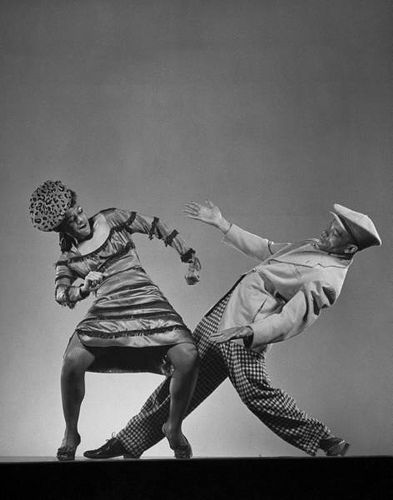
Rhythm: The Heartbeat of Jazz Dance
“Rhythm is the architecture of being, the inner dynamic that gives it form, the pure expression of the life force.”
— Robert Farris Thompson, African Art in Motion, p. 13–14
African American dance is rhythm-first — the music drives the movement.
If you’re executing elaborate steps but not locked into the beat, you’re missing the life of the dance.
The essence of jazz dance is to “get on the beat train” and then embellish, syncopate, and add your own voice to the rhythm. This conversation between dancer and music is what makes jazz dance a living art form.
Control: The Aesthetics of the Cool
“When the musical break comes, it is not a matter of letting it all hang out, but of proceeding in terms of a very specific technology of stylisation… A loss of control places one outside of tradition.”
— Steppin’ on the Blues, p. 34
From the outside, vernacular jazz may appear wild compared to European traditions, but underneath is extraordinary control — a quality often called the aesthetics of the cool.
Historically, Black dancers could be in full-bodied motion while keeping a calm, composed face and upper body.
This ability to balance freedom of movement with effortless poise gives jazz dance its lightness, precision, and unmistakable swagger.
Asymmetry: The Unexpected Flow
“It is the lack of symmetry which makes African American dancing so difficult for white dancers to learn… The presence of rhythm and lack of symmetry are paradoxical, but there they are.”
— Steppin’ on the Blues, p. 35
While European dance traditions often prize symmetrical shapes, African American vernacular dance thrives on asymmetry.
This shows up in:
- The shapes of the body
- The timing of the steps
- The dancer’s state of balance
A dancer might be spinning through intricate footwork while holding an asymmetrical posture — keeping the movement alive, unpredictable, and deeply rooted in Africanist aesthetics.
Angularity: Dancing in Bold Shapes
In African and African-derived dance, movement shifts boldly from one angle to another. Every posture from a torso tilt to a hand placement can form a clear geometric shape.
European dance often blends transitions smoothly, but jazz dance celebrates angularity, creating tension and release for striking visual impact.
This quality extends beyond the dance floor. Cornetist Rex Stewart Jr. once described Louis Armstrong’s walk:
“His loping walk, the cap on his head tilted at an angle, which back home meant: Look out! I am a bad cat — don’t mess with me.”
— The Routledge Dance Studies Reader, p. 233
Improvisation: Freedom in the Moment
Improvisation is at the core of African American dance — a tradition that values originality and individuality.
“The African American aesthetic encourages exploration and freedom in composition. Originality and individuality are not only admired, they are expected… The point is to add to the tradition and extend it without straying too far from it.”
— Steppin’ on the Blues, p. 35
Coming from competitive ballroom, where choreography was rigid, I found jazz dance liberating. Suddenly I could play with the beat, bend the steps, and create in the moment.
In group contexts, every dancer is expected to bring their own personality. This creates diversity within unity — one of the most beautiful aspects of jazz tradition.
Dynamism: Energy in Motion
Dynamism runs through all of these characteristics. Jazz dance is alive with contrast:
- Smooth vs. sharp
- Grounded vs. lifted
- Cool vs. explosive
This constant play of opposites turns every performance into a story of rhythm, control, individuality, and power — the very essence of jazz dance.
†
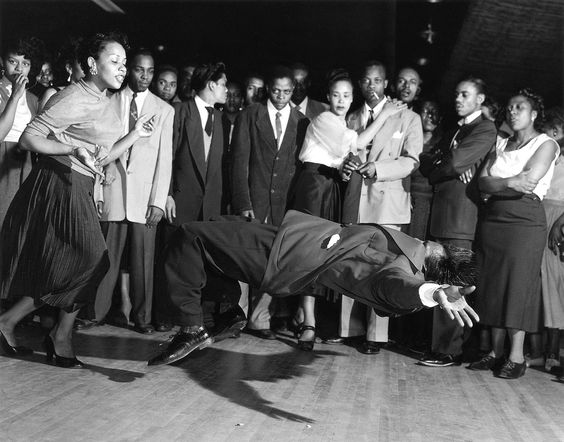
Fundamental Elements of Jazz Dance: Posture, Bounce, Backbeat, and Syncopation
As we’ve explored, the roots of jazz dance lie deep in West African dance traditions. Many of the technical elements are the complete opposite of the European dance tradition. To understand solo jazz and swing dancing fully, we need to examine its fundamentals: posture, bounce (feel or pulse), backbeat, swinging 8th note, and syncopation.
What Is the Posture in African American Vernacular Jazz Dance?
It’s important to define the centre from where all the movement comes. In European dances (such as ballet, ballroom, folk dances of Europe, etc.) the centre of the body movement is in the chest. When dancing those styles we tend to grow up and have a more erect spine with straightened limbs. We tend to search for symmetry and beauty in the form and the main trajectory of the movement is up.
“Dance with bended knees, lest you be taken for a corpse.” – Kongo proverb
As Steppin’ on the Blues describes:
“The bent knees and angulated bodies (of Black dancers) were in striking contrast to the erect spines, straight legs, turned-out feet, and rounded arms of European American dancing instructors.”
In West and Central African philosophy, flexed joints represent life and energy, while straightened joints signify rigidity and death.
What Is Bounce (or Pulse) in Jazz and Swing Dance?
Bounce—sometimes called pulse—is one of the most defining elements of swing and solo jazz dance. It embodies the timing of the music, acting as your own internal double bass. Even if your steps are technically correct, without bounce, you miss the heartbeat of the style.
Solo jazz movements release into gravity, with a dynamic spine and strong rhythmic drive. Bounce is already a dance on its own.
Bounce in Africanist movement is about:
- Avoiding overly straight limbs (Kongo tradition)
- Bending deeply at the knees
- Moving the whole body, but keeping it contained — no wild, uncontrolled gestures
This pulse is not just technique — it’s already a dance on its own. It connects you to the music’s heartbeat and gives every movement elasticity and groove.
What Is the Backbeat in Jazz Music and Dance?
The backbeat means accenting beats 2 and 4 in 4/4 time. In European traditions, the emphasis is usually on beats 1 and 3 (the “strong beats”). Jazz—and all swing dance music—flips this emphasis.
As Duke Ellington put it:
“We don’t snap our fingers on the beat. It is considered aggressive. In jazz we don’t push it—we let it fall.”
In a swing rhythm section:
- Bass often walks all four beats or emphasizes beats 1 and 3.
- Drums keep the hi-hat on 2 and 4, ride cymbal swinging in 8, and kick drum following the bass.
This rhythmic structure is the foundation for Lindy Hop, Charleston, and all vernacular jazz dances.
What Is Syncopation in Jazz Dance?
Syncopation is shifting the accent to an unexpected place in the music, often before or after the beat.
A syncopated rhythm in jazz dance is often created through the swinging 8th note.
The swinging 8th note is a rhythm every vernacular jazz dancer must know. It has a feeling of falling or a slight hiccup in its sound, encouraging a physical response of drop, release, and groundedness in the body.
Albert Murray described a jazz dancer as:
“A percussive instrument in dialogue with the musicians.”
In jazz dance, syncopation often comes through swinging 8th notes — a rhythm with a hiccup or fall that encourages dropping into movement.
You can syncopate any beat in the bar, and jazz dancers use it constantly, especially in improvisation.
Common steps that use swinging 8ths include:
- Triple step
- Stomp-off
- Kick ball change, hold ball change, slide ball change
The rhythm stays the same, but the shapes vary endlessly. This playfulness is part of what makes vernacular jazz dance so alive.
Why These Fundamentals Matter
Posture, bounce, backbeat, and syncopation aren’t just “techniques” — they are cultural carriers.
They connect today’s solo jazz dancers to the African roots of the form, the history of African American creativity, and the improvisational spirit of swing.
To truly dance jazz, it’s not enough to learn the steps.
You need to:
- Feel the weight in your center
- Let the bounce keep you steady
- Let the backbeat guide your phrasing
- Use syncopation to surprise and delight
This is how you “really swing” — earning the respect of both musicians and dancers, and honoring the roots and branches of this African American art form.
Curious to discover more tips to improve your solo jazz dancing and teaching?
Check out my blogs:
- Basic solo jazz steps every dancer should know
- Charleston Dance History: from African roots to 1920’s craze
- How to Do The Charleston Dance – steps, styles, history
- 6 golden rules for teaching solo jazz
Sources:
- Steppin’ on The Blues The Visible Rhythms of African American dance by Jacqui Malone
- Ring Shout, Wheel About: The Racial Politics of Music and Dance in North American Slavery By Katrina Dyonne Thompson
- Hot Feet and Social Change: African Dance and Diaspora Communities edited by Kariamu Welsh, Esailama Diouf, Yvonne Daniel
- Tappin’ at the Apollo: The African American Female Tap Dance Duo Salt and Pepper By Cheryl M. Willis
- Class Act: The Jazz Life of Choreographer Cholly Atkins by Cholly Atkins, Jacqui Malone
- Jazz Dance: A History of the Roots and Branches edited by Lindsay Guarino and Wendy Oliver
- Choreographing Copyright: Race, Gender, and Intellectual Property Rights in American Dance By Anthea Kraut
- African Dance: An Artistic, Historical, and Philosophical Inquiry edited by Kariamu Welsh-Asante
- The Routledge Dance Studies Reader edited by Alexandra Carter, Jens Giersdorf, Yutian Wong