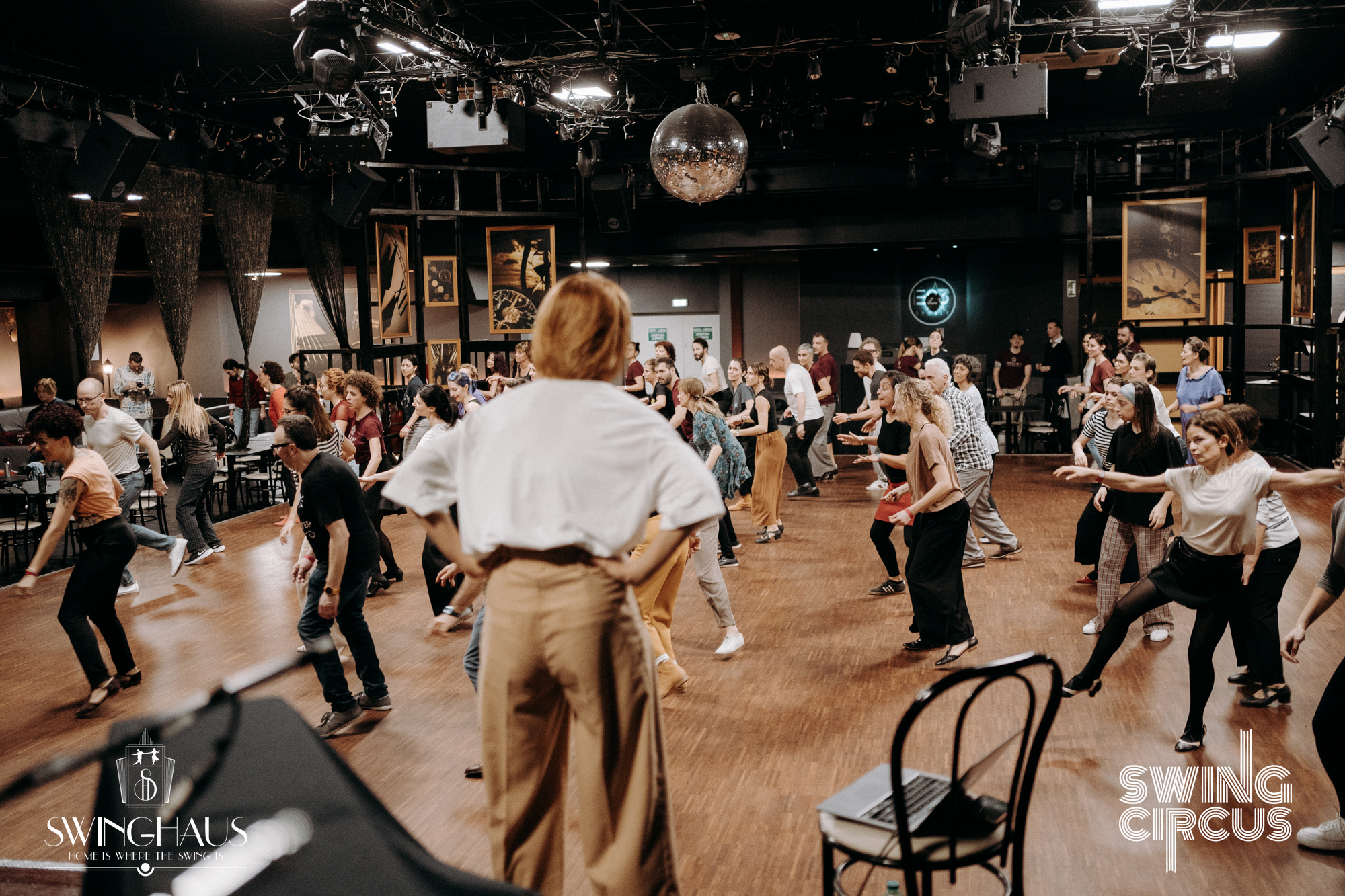
I’ve been teaching solo jazz for over 12 years now – all over the world at festivals, and online with my school Secrets of Solo. In this post, I’m sharing the mistakes solo jazz teachers make most often, based on my own experience and what I’ve seen in classrooms all over the world.
This is not a list of “rules for everyone in the world” — it’s my experience, my story, and what I’ve seen in hundreds of classes over the years.
This blog post actually came about after my student Alexander messaged me to say he’d been offered a spot at a local swing dance school to teach a solo jazz course. He asked me:
“Ksenia, what are the most common mistakes to avoid when I start teaching solo jazz?”
Common Mistakes Solo Jazz Teachers Make:
Mistake #1: Overloading students with too much material
I remember my first solo jazz class as it was yesterday. It was St. Petersburg in 2010. I was teaching an open class on solo jazz in the biggest dance school in the city. I came from ballroom and contemporary dance, and solo jazz vocabulary was very easy to me. So i thought it would be easy for people too. In my very first open class, I decided to teach almost half of the solo jazz vocabulary in one go — Fall Off the Log, Charleston basic, kickball change… Little did I know 🙂
I thought I was giving value. In reality, I was overwhelming people.
How much is too much?
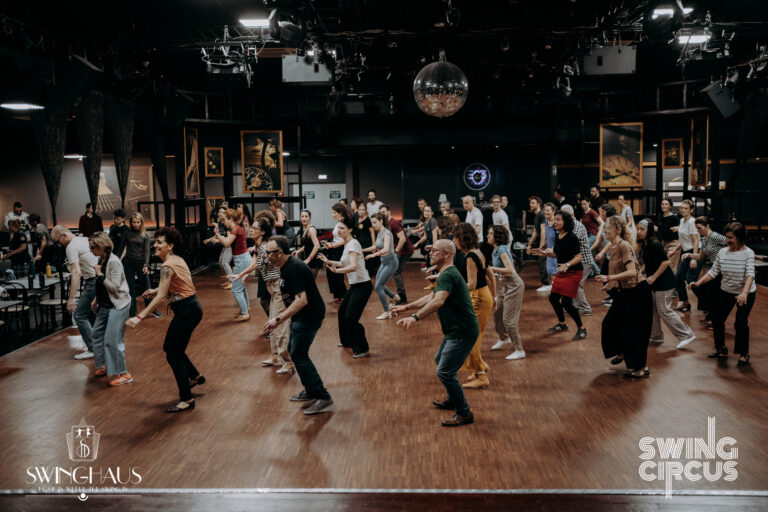
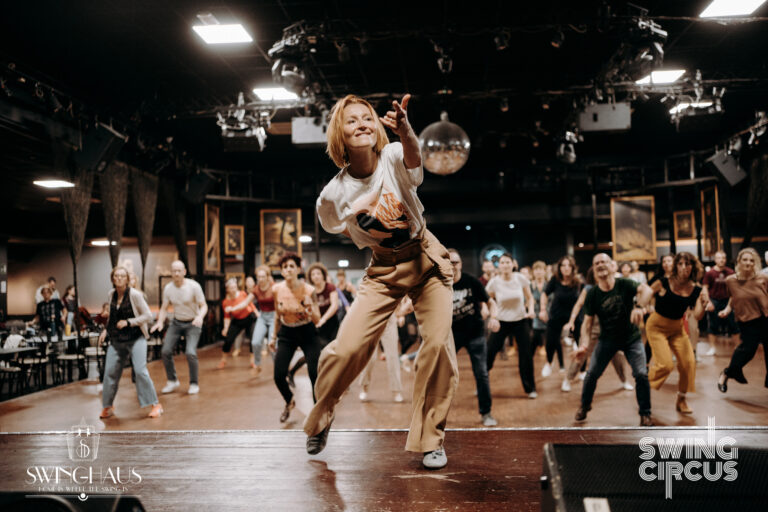
From my experience, if we are talking about a combo or a choreo, teaching people an A–A–B–A structure in a one-hour class is enough — and remember, the A-sections repeat, so you’re reinforcing what they’ve learned.
If you’re introducing a new step, even one step can be enough for a whole class, depending on how you use it:
- Explore its variations
- Try it in different tempos
- Combine it with other footwork
- Create a small combo or choreography
If the goal of the class is “learning new footwork,” I’d recommend three steps maximum. But of course, teach people to use the steps in a context, in a dance, in an improvisation. Beyond that, you risk people leaving with their head full but their body empty.
Don’t measure a class by how many steps you cover — measure it by how deeply your students can embody and dance them.
Mistake #2: Turning every class into an endurance test
When I was younger, I thought a “good” class was one where people crawled out on their knees, sweaty, and with no energy for anything else 🙂 “Look, how I worked them!” – thought. People even used to say “Ksenia killed her students again”. Since everyone said it like it was a good thing, I always took it as a compliment and took pride in it. Until one day, I got a different feedback. I was teaching 3 month intensives in Barcelona with high level dancers. After one of my “killer” classes, my students asked me if we can change the intensity. Because she really wants to go deeper and use the material rather than just endure my class as a bootcamp. That stayed with me. With years, I changed.
Sometimes that’s fun, but it’s not the only way to teach. Now I see physical intensity as just one part of the class — one 20-minute block in a one-hour session.
I like to think of the class in three parts:
- First 20 minutes – continuous movement, body work, connecting to the body, waking up hips, chest, arms, using different music styles.
- Middle 20 minutes – learning new material, technique, or a concept, with sweat and focus.
- Last 20 minutes – choreography, repeating a combo to find the groove, or improvisation (solo or in groups).
- Always a moment to cool down and come back to the “Real world” .
Section 2 or 3 can be a high intensity section of a class.
Remember: in swing dance schools, most students are not professional dancers. They’re dedicated hobbyists with lives outside of class. They want to leave inspired and energised, not destroyed.
Mistake #3: Teaching only technique
Yes, technique is essential — but dance is not just numbers, lines and shapes. Teaching only technique is like giving people a skeleton without flesh.
So, what’s more important: technique, history, or musicality?
It’s not possible to choose. Everything is important, and they complement each other. I would even add two more to the list: expression and improvisation (or artistry).
Even if your main goal for the class is teaching choreography or new footwork, you can still:
- Tell a little story about the step’s history or meaning
- Highlight the phrasing and groove in the music
- Open a moment for styling or improvisation
It doesn’t have to turn into a lecture — these elements can be woven naturally into the movement.
In Secrets of Solo, every class includes a bit of everything, so students leave feeling like they had a full, nourishing meal, not just one ingredient.
Mistake #4: Teaching dance “through the head” instead of the body
Dance has to be experienced in the body — through trying, through making mistakes, through repetition.
Some teachers spend too much time talking, counting, or explaining logically while students stand still with arms crossed.
For some people, asking questions about theory or numbers is actually a way to avoid moving, maybe because the body feels vulnerable or they’re afraid to make mistakes.
Of course, you can use counts or break things down logically — but then get them moving right away. If you want to show a video or explain history in detail, unless it’s a few minutes moment, save that for a dedicated moment or a separate theory session.
The body doesn’t lie. It stores our history, our fears, our joy. Your job is to help people step into movement, not hide from it.
Mistake #5: Over-correcting and expecting instant change
I learned this first when teaching my own husband to dance. I had to really pace my notes to him and give one at a time. If you give someone five or ten corrections at once and expect them to apply them all immediately, it’s too much. Their mind can’t hold all that information and their body can’t process it instantly. Most likely, they will just shut down on you.
When should I correct, and how do I keep it positive?
- Keep corrections sparse and singular.
- If you notice something common, say it to the whole group and immediately try it in the body.
- If it’s personal, come closer and give it privately, without the pressure to “fix it now.” More like “Look, how about trying this…” or “Follow me with the beat…” or “Well done and now pay attention to…”
And remember, many things will self-correct if you simply let people dance the move for a whole song, sometimes two.
You want them to learn how to dance, they shall dance and experience. Body is smart, it will find a way. But it needs time to try and try and try again.
Always speak warm and encouraging as a base rule for teaching — no need give out to your students for mistakes. They’re there to explore.
Mistake #6: Teaching only footwork
Yes, dance requires technique — but technique alone is not dance. If we reduce a class to just steps and drills, it becomes little more than physical training. Dance is also expression, artistry, spirit, and energy.
Many teachers focus their whole approach on steps only. Students leave knowing lots of vocabulary, but when they dance, it’s like a Lego construction — correct but lifeless.
Yes, solo jazz is a heavily footwork base dance style. It’s also:
- Body movement
- Head, eyes, facial expression
- Arms, toes, and the “periphery” of the body
- The quality of movement and how it connects together
- Style
- Energy, expression, delivery
In every step you teach, you can:
- Show how you dance it
- Share how the old-timers did it
- Offer variations and styling ideas
- Give tools for finding personal style
Even in a beginner class, a tiny tip like “let your chest move here” or “add this expression to the arm”, ask “where are you looking now”? or “are your hips moving?”. All that plants a seed for holistic body movement and individuality.
In Secrets of Solo, I focus as much on style and feeling as on steps, because jazz is about self-expression.
Closing reflection: Teacher, You are the guide
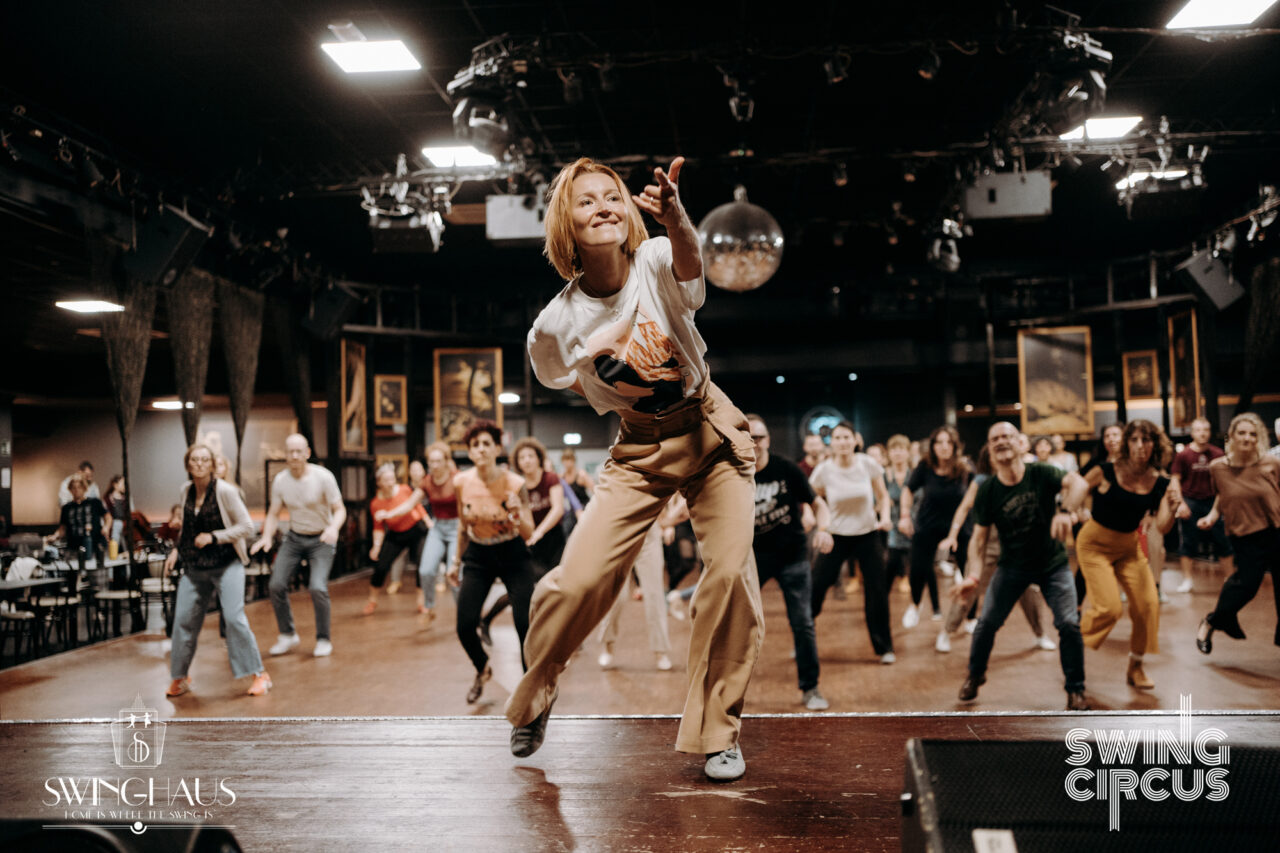
Of course people come to class to learn a style, to move their body, to enjoy the music they love — maybe even to dress in the vintage style that inspires them. But on a deeper level, we come to share something with other humans: to give and receive energy, to recycle it, to feel alive.
In that sense, the role of a teacher goes beyond showing steps. You are a guide, almost a shaman, leading people into an hour of connection: with themselves, with others, with the music, with the present moment.
I always carry with me something a friend once told me:
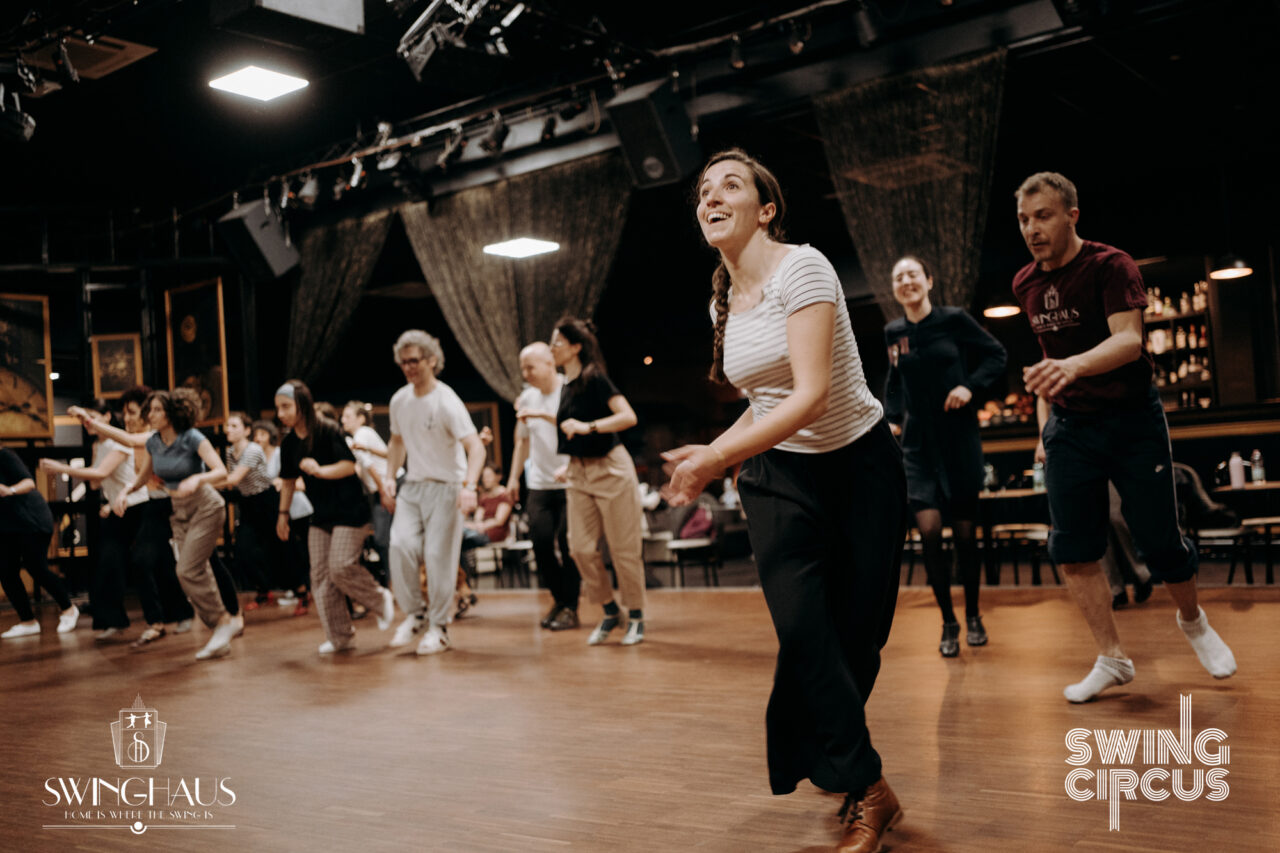
“Think about this — out of all the things they could be doing right now, these people chose to spend their time and their money (which is energy stored) to be in your class. This exact group of people, in this room, may never come together again. How precious is that?”
Since hearing that, I’ve felt the weight and beauty of that choice.
My job is not to dominate or simply “deliver” information. It’s to share, to multiply the good energy, and to create a space where everyone leaves a little lighter in spirit, more connected, and more alive than when they arrived.
How to Avoid the Most Common Mistakes Solo Jazz Teachers Make:
Here is the truth: You as a teacher grow as you teach. The best way to learn and get better is to do the thing you are learning. Like me, and like all teachers, you will inevitably make some mistakes, learn from them, grow, and become more masterful in your artform of teaching. That’s the path.
Be mindful, prepare, have a good intention, and be open and aware. Teaching and sharing out of love is the best advice I can give.
In addition, everything I teach inside Secrets of Solo is designed to help you avoid the mistakes solo jazz teachers make — and to give you the tools, creativity, and inspiration to keep your students engaged and inspired.
Yes, I teach footwork — but also musicality, improvisation, arm work, body movement, and the history that gives meaning to the steps. Every class combines these elements so you can feel the dance, not just do it.
For teachers, this means you won’t just improve your own technique — you’ll also discover specific tools, clear explanations, and creative ways to teach concepts, steps, and materials to your own students.
“What I love as a teacher: the tools I discoved, the way to break things down—I now use it in my own classes.” – Elena, student of Secrets of Solo
The inspiration is there for you to take, adapt, and make your own.
Curious to learn more about jazz?
Here are some blog posts you might be interested in:
- This blog will help you explore the history of jazz dance from African roots to modern styles. Learn its origins, cultural impact, and defining characteristics. History of Jazz Dance: 10 insights on African Roots & Cultural Legacy
- Charleston Dance History will help you discover the Charleston dance history, from African roots and Gullah culture to the 1920s flapper craze.
- This one will give you insight on how to deal with performance anxiety